This article was written by Brandon Smith and originally published at Birch Gold Group
It’s the magic number, the line that’s not supposed to be crossed; when a nation’s public debt finally exceeds its GDP. Historically speaking, it’s not a sign of doom like many economists suggest. Numerous countries have sustained for decades with a ratio of well over 100% and many other factors have to be considered before it’s officially time to panic. Of course, there are some cautionary tales.
Greece and Argentina are two examples. A number of developing countries shave been hit with precipitous decline after they hit the 100% mark. In the case of the US, having access to the world reserve currency changes the dynamic dramatically. Debt does not act like debt in an environment where global trade and investment is mostly priced in dollars and you control the ability to print those dollars at will.
That said, the recent historic milestone has many people suddenly worried about the state of the US system and the precarious nature of the geopolitical landscape going into the future.
Gross national debt for the US crossed the 100% mark back in 2012. The official public debt touched 101% last month. This factor combined with the inflation of the Biden era and the geopolitical uncertainty of the Trump era has the media talking out loud about the kind of crisis we alternative economists have been warning about for quite some time.
It’s certainly a startling change; alternative economists are no longer the voice in the wilderness. But let’s consider for a moment WHY the mainstream has decided to adopt a crisis posture after so many years of ignoring the obvious.
It’s Okay To Talk About A Crash If It Can Be Blamed On Trump
The corporate media has a clear economic bias; optics must be good for establishment endorsed leaders and optics must remain bad for any political leaders on the naughty list. Regardless of what a person might think of Trump’s presidency so far, it’s impossible to ignore the fact that the media spins his every move into a negative, even when he succeeds beyond expectations.
The tariffs are a perfect example – After Trump announced his aggressive strategy to counter outsourcing, the media and Democrats asserted that an unprecedented inflationary disaster was inevitable. This never happened.
They claimed consumers would have to eat the cost of the trade taxes on international corporations. This didn’t happen either. In reality, the CPI barely budged in response to tariffs. Why? Because companies are absorbing the higher costs (as I and some other economists predicted).
The retail markups on goods made overseas are substantial. International conglomerates have plenty of room to take the hit while avoiding raising prices on the shelf. Trump knows this, and anyone who has studied export markets knows this. Yet, the demonization campaign against tariffs was absolutely frantic.
This is just one example of a false threat; an imagined crisis fabricated for the sake of political interests rather than for the sake of protecting the American people. It’s important to be able to discern between very real economic dangers and false narratives designed to target and scapegoat.
Suddenly The Mainstream Is Noticing US Debt
The Committee for a Responsible Federal Budget (CRFB), a Washington-based fiscal watchdog, released a sweeping new report this week warning that policymakers are “woefully underprepared” to handle the next recession or financial shock.
They assert that the national debt crossing the 100% benchmark is one signal among many that the US cannot handle a surprise destabilization event, though they note that interest payments on that debt are the greater concern. By 2036, according to Congressional Budget Office projections, debt is on track to reach 120% of GDP with interest swallowing $0.26 of every dollar the government takes in.
The report also warned about rising inflation dangers associated with monetary policy. This falls in line with reports of tensions between Trump and the Federal Reserve, but corporate news sources are painting the Fed as a kind of “wayward institution” stuck in the middle of a bad situation they have nothing to do with. In reality, the Fed is the cause of most of our nation’s debt and inflation problems; they enable the money printing bonanza and they are unaccountable to the American public.
Fortune Magazine has tied threats of inflation and debt accumulation to the Iran war, and Bloomberg has published articles lamenting an inevitable “wave of global inflation” due to the conflict. I find this fascinating given the media’s refusal to accept that inflation existed after the 2020 election. Bloomberg even asserted that rising inflation was a “mirage” and Fortune reprinted those claims.
The question is not what Trump will do in the face of a crisis event; rather, we must ask what the Fed will do? Will they raise rates again to mitigate inflationary pressure, or will they turn the money printers back on to stave off any potential deflationary consequences. Given their track record, it is likely the Fed will inflate, but high interest rates at this time could also be devastating.
With the GOP ostensibly in control of the government the bankers might be able to divert all blame onto conservatives policies, and to me this is the real concern. Will the Fed pull the plug on the economy simply because they have a convenient scapegoat?
Geopolitical Black Swan Or Minor Blip On The Radar?
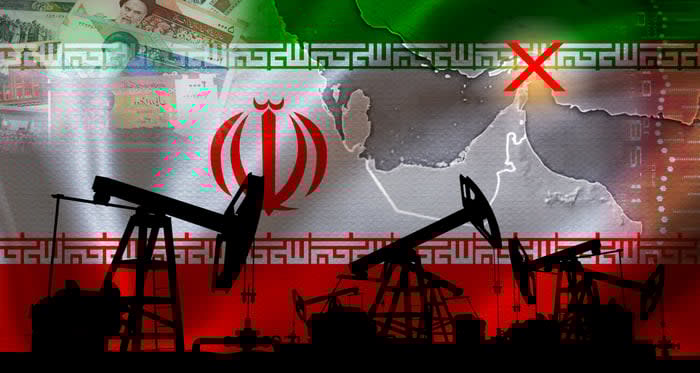
Over the past couple years I have warned extensively about war with Iran, specifically in relation to the Strait of Hormuz and the 20% of global oil shipments that travel through it every year. The war itself is superfluous; I have little doubt that the US can and will destroy the majority of Iranian military infrastructure within a couple months. The greater danger is how easy it will be for insurgent elements to keep the strait closed using simple guerrilla tactics.
It doesn’t take much to block up the narrow strait and threaten global oil prices. Securing it would have to be a top priority of the Trump Administration, which seems to be the case given Trump’s latest statements. Troops on the ground are unavoidable to ensure the Hormuz remains clear, and this is going to ruffle a lot of feathers.
The strait is the only legitimate geopolitical leverage Iran has against the US, but not in the way many people assume. It is true that IF the Hormuz remains contested for more than a couple months, the economic effects could cascade into the markets and cause serious instability. However, this instability will initially affect the East, not the West.
Only 7% of US oil imports and 6% of European oil imports pass through the Hormuz. In comparison around 50% of China’s oil imports and 40% of India’s imports rely on the strait. The hardest hit, however, will be Japan, with over 70% of their oil imports relying on ships passing through the Hormuz. And, as most economists know, Japan’s markets are deeply intertwined with US markets through the Yen carry trade.
In Japan, ongoing oil-driven inflation could pressure the Bank of Japan to tighten policy through rate hikes or reduced bond buying. This narrows the carry trade differential, eroding carry profits and potentially triggering an unwind. In other words, it will no longer be cheap for investors to borrow Yen at near zero rates and then buy assets in the US.
Prices would have to rise considerably in order to trigger such a cascade, though. It’s important to note that the panic over an impending energy crisis is currently based on speculation and not legitimate shortages.
When an actual crisis occurs, we’ll know it. When shale oil drillers in the US ramp up production because they KNOW the high prices can sustain them, then it’s time to worry. When we see sustained weekly gas price spikes of 10%-20%, then it’s time to worry. If foreign countries initiate a large scale dump of the dollar as the petro currency, then it’s time to worry.
The war itself would have to carry on for many months to create these conditions and I’m not convinced yet that this will be the case. The expectation among many on the political left (and among libertarians) is that the war in Iran will carry on for years because that’s what happened in Iraq and Afghanistan.
I have to ask this question, though: Has anyone considered the possibility that those wars lasted for decades because they were DESIGNED to go on for decades? Who decided the objectives? Who decided the parameters for success? Who decided that occupation was necessary? It was establishment Neo-cons and Democrats that created the necessity of occupation out of thin air. “Defeating the enemy” became a secondary concern.
The length of the Iran war will not be decided by the current Iranian regime, it will be decided by Trump. If the only objective is to destroy Iran’s ability to project military power and to secure the Hormuz (and avoid occupation of the greater territory), then the war will be short and there will be no energy crisis.
This is not my endorsement of the war in general, just the facts. There are much bigger threats to the US economy and the global economy than Iran right now.
The Real Danger
Iran has the potential to become a “linchpin” disaster, but the conditions are not right for one yet. For now, I continue to believe that the most significant danger to the global economy and the US economy is still the European oligarchy and their push for war with Russia over Ukraine. Any move by the Europeans to deploy troops to the region could result in a large scale war that would dwarf the events in Iran and completely derail already fragile economic structures.
If you’re worried about global Armageddon, look to Ukraine, not Iran.
The largest secondary hazard is domestic. NGO funded leftist riots, terror attacks and movements to burn the country to the ground in the name of Marxist “deconstruction” are more perilous to the US than most of the populace understands. Add to this the increasing number of Islamic terror attacks and we’ve got a recipe for civil breakdown. Internal insurgencies would have to be handled by the armed citizenry rather than sitting around and relying on the government to do everything.
Then you have the Federal Reserve and the Catch-22 policy conundrum. The central bankers could, theoretically, collapse the US economy at any given moment using the sudden whiplash of a large rate hike or a large stimulus program. The financial system would not be able to adapt this time. With Trump in office I would argue that the bank is MORE likely to do this.
There is a fine line between vigilance and hysteria. We have to be careful not to blackpill ourselves into oblivion over events like tariffs or the war in Iran. That said, there are indeed very real catalysts brewing within geopolitics and on the home front. At bottom, there are people out there that desperately WANT the US to collapse.
For them, every crisis is an opportunity to push their agenda forward whether those crises are engineered or not. By extension, some threats are fabricated and exaggerated to conjure up a public frenzy, manipulate popular opinion and destroy the US from within. Knowing what is real and what is illusion is essential to our nation’s survival.
The U.S. government can print more dollars. It can borrow more money. But it cannot create more gold. There is only so much of it on this earth – and that’s exactly why central banks around the world are buying it at record levels. A physical Gold IRA lets you hold this finite, time-tested asset inside a tax-advantaged retirement account. Request your free info kit from Birch Gold Group and learn how simple it is to get started.


15 Comments
“It doesn’t take much to block up the narrow strait and threaten global oil prices.”
.
This also serves the agenda of The Indispensable Nation in service of another Even More Indispensable Nation. Having this narrow strip as a choke-point gives The Heroes the color of justification for bringing in their heavy hand in service of… you know Who. This also serves all those special insiders who manipulate and front-run (and control) the price and flow of oil in World Markets. What appears as a weakness to the outside can often be (and is) a hidden source of strength and ways to control the Game.
.
“Has anyone considered the possibility that those wars lasted for decades because they were DESIGNED to go on for decades?”
.
This is now beginning to dawn on a whole lot of people. Many things are starting to take shape in the Spirit of the Times. And even people who are not used to question official conjured narratives and relentless propaganda are beginning to ask questions. This has opened an unintended Pandora’s Box consequence that may not have been anticipated by the brilliant minds that push World events around like chess pieces on a blood-soaked wrecked chessboard.
.
“The length of the Iran war will not be decided by the current Iranian regime, it will be decided by Trump.”
.
Not sure if that man is deciding ANYTHING about this. That collar around his neck is showing too clearly through his dress shirt.
.
“There is a fine line between vigilance and hysteria.”
.
We want vigilance. ‘They’ want hysteria. Vigilance serves The People and not Them. Hysteria serves Them and not The People. And what do we have today? Both.
.
“Knowing what is real and what is illusion is essential to our nation’s survival.”
.
Yes it is. The sad thing is when you consider how very many people prefer illusions and fairy-tales to reality. Reality can be tough. Fairy tales go down easy. And most people actually seem to prefer being told what to believe and do anyway. A personality hangover from the Daddy-and-Mommy syndrome from childhood that too many never grow out of.
.
A good dose of prayer these days would not a bad idea…
“Not sure if that man is deciding ANYTHING about this. That collar around his neck is showing too clearly through his dress shirt…”
–
I think if Trump or Hegseth intended for Iran to be a forever war they would have committed to a large scale ground invasion immediately instead of giving the American public time to debate about it. Every aspect of the operation suggests decapitation of leadership and a swift forced settlement (2-3 months max). I’m sure there are people around Trump, though, that would like this situation to escalate beyond that (Lindsey Graham comes to mind). I still believe this war is less about Iran and more about containing China, but we’ll know for certain which direction this is going in a couple of months.
“I still believe this war is less about Iran and more about containing China, but we’ll know for certain which direction this is going in a couple of months.
Yes indeed it is about China (and India). It’s also about saving the Petrodollar, the Greater Israel agenda which was openly publicly expressed and pledged to years ago, and The Indispensable Nation’s World dominance in general. It is about sending (yet another) message to Russia about how Trump is Big Bad Leroy Brown… Baddest Man In The Whole Swamp Town so don’t mess with me Ruskies.
Now we see what that Venezuela business was about. They had to go in there before Iran so that another oil source had already been grabbed. While the infrastructure there is not yet functioning… it was necessary to seize the areas to put them in the back pocket. Sort of like what they did to the Native Americans when something of value was found on lands that the Natives were occupying – they were forced off the land and not with a gentle hand.
This is also part of the End Of The Age (un)Holy War that was long prophesied to come between West and East, (captured, distorted) Christianity against Islam, The Chosen vs. The Heathens. Of course none of this had to happen – the Powers That Be MADE this to happen. Their ancestors made the ‘Prophecy’ and the ones now think it’s there job and destiny to finish the job. Don’t want to make liars out of the old prophecy now do They!
All the rest of us are just in the way. We are of no concern to Them.
Yeah, I think that’s a stretch. If this war is over within a few months, a lot of people calling it Armageddon are going to look really bad. I would take a wait-and-see approach before jumping to that conclusion. Remember when evangelicals were all saying Obama was the “Anti-Christ”? That was pretty ridiculous. Also, the Native Americans were godless cannibals and not actually native to America, just as the Muslims are not native to the Levant (they started the holy war in 630AD). I don’t particularly care what happens to their lands or their governments. I will say that if the war escalates into a large scale ground invasion, it does open up a can of worms that is dangerous and it could cause greater economic problems (not so much World War III).
Let’s watch what happens with Kharg. If we gain control of that island we pretty much have China by the balls with regard to the oil supply.
Correct. A lot of people are missing the bigger picture of this war. China could be crippled by the loss of the allied Iranian regime. Look at what’s happening in Cuba right now with the cuts to their oil supplies from Venezuela. That’s a microcosm of the change that’s coming to the East, I think.
China has over a thousand coal-fired power plants with hundreds per year being built, and they have reliable sources of coal, not to mention they are fast-tracking nuclear.
Not relevant. 20% of their economy still relies on oil and their military needs ample oil to function. Without Iran and the Hormuz they are sunk.
Are we assuming that China won’t move to maintain their energy lifeblood? I seem to remember that Japan was brought into WWII by us cutting off their oil supply.
China doesn’t have the capacity to secure it. That would require a massive navy that actually functions. Japan in WWII had such a navy. Today, the US is the only country in the world with such a navy.
How can one think in terms of having a country by the balls that still holds a lot of our debt and and rare earths, not to mention still makes a bulk of the crap we assemble or buy? I call it shooting yourself in both feet.
Actually, I didn’t include this point in the article because it was already getting too long, but China’s US debt and dollar holdings have been cut in half in recent years, meaning they no longer have the economic leverage that they used to have. Also, the US has reduced Chinese exports down to 9% of total foreign goods, which means we’re doing just fine without them. If the CCP was going to use economic warfare on the US, they should have done it back in 2018-2019 before covid when they had far more power. Today, China is being CRUSHED by Trump’s tariffs, and losing influence over Iranian and Venezuelan oil exports will be the final nail in the coffin.
There’s a reason why both Russia and China have been silent. They know they cant do JACK SHIT- both from a military and economic perspective- and that’s a fact. Too many people have been brainwashed by the mainstream media freaking about about how “china will overtake the U.S.” BS for the past two decades. Since when has mainstream woke left and the blackpillers ever been right?
I would also argue that the only reason China is in their current place is BECAUSE of the globalists of the 70’s-90’s with Henry Kissenger at the helm INTENTIONALLY helping China grow and sending all of our manufacturing labor to China at the benefit of the big globalist corporations – not the American public. Let us not forget it was the U.S. that also invited China to the WTO as well. This was all intentional and obviously not for the good for the average American public.
If it wasn’t for the globalists of that era- China would be no different than any shithole 3rd world country – just larger. And arguably- it STILL is a shithole – with 99% of it’s population living under poverty – only the 1% CCP connected elites are allowed to thrive- zero middle class. The only thing they know how to do is make low quality goods that fall apart the moment you touch them- just look at how well their “new tech” is working for Iran. Welcome to communism. Don’t let the shiny propaganda funded ghost buildings fool you on twitter lol.
“ I would also argue … “ Verifiably correct.
Michael Pillsbury was a recent Georgetown foreign service PhD, went to work for super k and participated in the effort from the ground floor.
https://www.amazon.com/Hundred-Year-Marathon-Strategy-Replace-Superpower/dp/1250081343
About 10 years ago he published what amounted to a 200+ page apology letter to the American people. Spoiler alert, if you read it your blood will boil.