This article was written by Brandon Smith and originally published at Birch Gold Group
The young do not think about getting old, and this is to the greatest benefit of governments which spend and inflate younger generations out of any future subsidies they might one day come to rely on. For most people in Gen Z, though, there is at least a tacit acknowledgment that they are paying into a system that might not be there for them when they retire. However, their only point of reference is usually the rantings of their socialist college professors or a mob of crazed activists on TikTok.
So, naturally, the only solution they can come up with is MORE power for government, more taxation, more communism and more redistribution of wealth. In other words, give more control and more cash over to the state which already misspent their money.
The idea of pillaging the wealth of others as a shortcut to security for a single generation is not new. This plan is doomed to fail, as it has failed in nearly every socialist system with a population larger than around 10 million people.
Even in “market-capitalist welfare states” that are often cited as “successful” like Norway, Sweden, Denmark and Finland, the ability to continue retirement funding at a rate which provides a livable wage is only possible if the retiring population is much smaller than the working population.
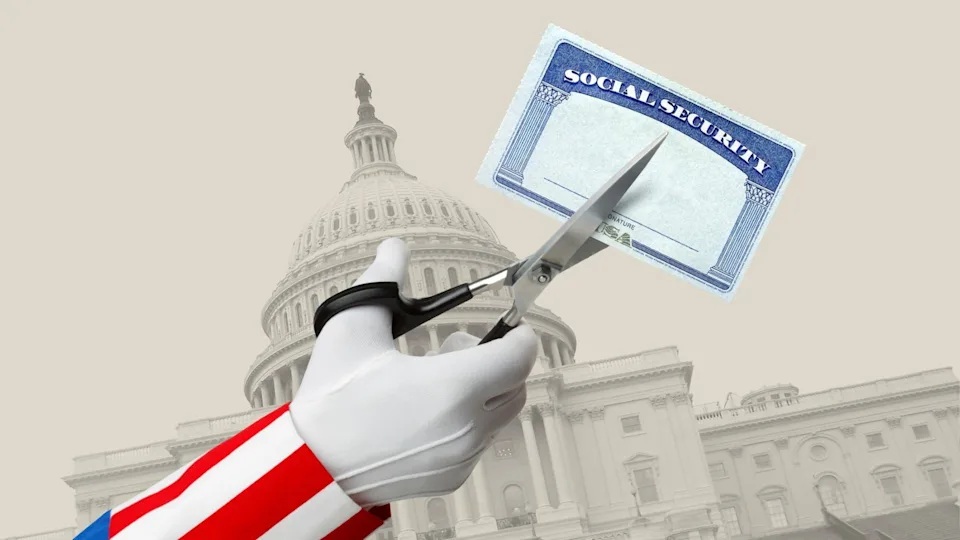
Across the west at present, the larger Baby Boomer generation is aging completely out of the labor pool and these systems are being depleted rapidly. The demographic squeeze is tightening and in the US, those special Treasury securities are now being redeemed – Social Security is set to decline starting in 2034.
Current SS reserves are at $2.56 trillion. These reserve funds are being depleted every year by a spending deficit. The deficit is not fixed and fluctuates wildly, but the overall trend shows it is clearly growing. In 2025 the shortfall was $160 billion (that’s the amount of extra money the government has to tax or borrow in order to fully cover the costs of Social Security beyond normal revenues). That deficit is projected to rise to $393 billion by 2033.
As these reserves disappear due to deficits, eventually social security payments will be reduced as a consequence.
By the time I am old enough to collect, Social Security payments will be cut by 22% (accounting for steady inflation). By the time Gen Z is old enough to collect, their SS payments will shrink by 35% with inflation included. The fund does not necessarily implode but the benefits will becomes more and more useless over time.
At bottom, the fund will be dead because it will no longer be able to adapt to inflation. Costs will continue to rise and SS will shrink exponentially. Relying on the system for retirement would be impossible. This is also assuming there is not an economic crisis event in the future which completely derails government funding for SS much sooner.
This brings up a lot of questions…
Is Social Security actually a necessary program? In the US there are currently 71 million beneficiaries of SS and out of that group around 14 million depend entirely on SS checks as their only source of income. An even larger portion of the population needs these checks as supplemental income.
In other words, the program could be scrapped, but it would be devastating to a large percentage of the public. I would argue that if the government is going to operate as an economic backstop for any group, then the elderly should be that group. Anyone who has cared for an elderly relative understands that we will all one day hit an age-wall that prevents us from generating incoming on the fly. We’ll either be wealthy and flush with savings and assets, or we will be dependent on the charity of others.
Is Social Security the answer? No, not as it stands now. Many Americans believe that SS is like a savings account where their money is held until they meet the conditions of retirement. This is false. Others might consider it an insurance program, but this is also debatable. Social Security is managed more like a subsidy than a savings account or insurance. The money you paid into the system over your lifetime is long gone.
Public anger is rising among younger generations because they have to pay into subsidies that they have no expectation of benefiting from in the future. Marxist NGOs and activists take advantage of the angst and try to convince people to adopt bigger government and socialist wealth redistribution as the answer to all their problems. This will lead to calamity for the country.
So what is the solution? The vast majority of people would prefer to know that they will be taken care of in their old age. How do we ensure that the elderly are provided for without continually crushing the economy with debt? Let’s go through a list of solutions…
Fundamentally Change The Way We Look At Aging And Family
Before 1935 there was no such thing as Social Security, so how did people aging out of the workforce survive? They largely relied on family to help take care of them. For hundreds of years this was the norm in the western world. At the turn of the century around 70% of elderly people lived with their children or other family members, but this practice declined rapidly from the 1920s onward.
This is why the Social Security program was popularized in the first place; far too many older Americans no longer had a family safety net and so they jumped onboard the SS train in response. This is not to say that kids should be “required” to take care of their parents, but the principle should be encouraged.
And, if you think about it, this might also help to encourage better parenting practices and more respect for the nuclear family. Who would want to be a deadbeat parent when their kids will one day be the people they rely on most in old age? Who would want to abort their children when those children are their future safety net? Who would want to get a divorce and break up their family at the risk of being destitute when they hit their twilight years?
Yes, this sounds rather mercenary, but it’s foolish to discount selfish incentives as a means to keep civilization functioning. Many people don’t need incentives to do the right thing, but many other people DO.
Returning to the old tradition of caring for relatives as a family or tribe would help to prevent mass destitution and suffering of older Americans should Social Security and other programs fail. This doesn’t save SS, but it does make the public less dependent on the program.
At-Home Work For The Elderly
The knee-jerk reaction from many people (especially Baby Boomers) on the idea of delaying retirement is anger and outrage. I agree, to a point. These people worked their whole lives, raised families, struggled through national and global crisis events, and made it through to the other side. At 67 years old, they probably deserve a rest.
That said, life is not necessarily fair and expecting the government to be there for you is not exactly the best plan. In order for a safety net to exist for the most desperate people, those who are cognizant and functional might need to adapt. Also, there are many older Americans who would like to earn an income and keep busy but they have aged out of the normal labor pool.
With more older Americans staying in the workforce longer, Social Security deficits could be balanced and the funds could continue to flow for decades to come. For the first time in human history, senior citizens have access to digital jobs and at-home work. It’s possible for many older people to function in these fields with proper training programs (and maybe tax incentives for companies that hire the elderly).
I would rather have elderly Americans taking on such work and making money at home than corporations importing a bunch of third world migrants through H-1B visa programs.
Investment Of Social Security Into Appreciating Assets (Stocks And Commodities)
This is another idea that creates deep divides among voters, with the primary question being: What happens to Social Security if there’s a market crash and assets plummet in value?
But look at it this way – Over the past decade, if SS savings parked in treasuries were invested in gold and silver instead, the fund would currently have an extra $7 trillion. That would add another 12+ years to the lifespan of those savings. Investment in equities on the Dow Jones would have yielded an extra $8 trillion.
This is only a portion of SS funds and the gains would be undeniable. Is it gambling with the future, and with taxpayer money? Yes, in a way. But risks can be mitigated by diversifying between treasuries and other assets. I would argue that if we don’t take radical measures like this, social security is certain to fail, so what do we have to lose?
End Early Draws On Social Security
This is one of the uglier options available, which is to stop all early drawdowns by people ages 62-66 who take SS. They already get a 30% penalty, and ending early draw would slow the drain of funds for much older people.
Cut Funding For The Top 20% Of Earners
Is this punishing people for being successful? Yes. But denying social security for the top 20% of American earners with extensive savings and assets would save $500 billion per year. This would eliminate the current deficit and any future deficits for many years to come.
If someone can live comfortably without SS after retirement, then maybe they should forgo the monthly checks so that SS can exist for others who are not so well off. Again, this is not fair, and I’m not saying I agree with the measure on principle, but if we’re talking about survival of the program, this is an obvious strategy.
Increase Fertility Rates And Population Growth
Across the board, not just in the west but in the majority of countries around the world, fertility rates are dropping and populations are growing older. Without enough young people filling the workforce the elderly subset will greatly outweigh the available tax base. In other words, too many hands waiting for too little cash.
This incoming crisis has led to some nefarious people justifying some horrific options. For example, multicultural progressives use the fertility decline as an excuse for mass immigration from the third world. Hey, that’s millions of new taxpayers to help support retirement funds, right? Except that these migrants destroy welfare structures and collapse funding even faster.
Other leftist governments (like Canada) are increasingly suggesting government assisted suicide as a way to reduce the elderly population and solve welfare (and healthcare) deficit problems. This is, of course, monstrous and immoral, but fears over debt collapse will lure some people into supporting many otherwise unpalatable evils.
How do we increase population naturally? The only sure way is to increase individual wealth. How do we do that? That’s the question of the ages. Socialism is certainly not the answer – No socialist system has ever actually increased the wealth of the middle class without turning to free market means, and even then they tend to stifle productivity and entrepreneurship. If there’s a cap on success, individual wealth will fail. This is a fact.
Is There A Better Way?
A lot of people are going to question if Social Security is even worth saving. After all, there has to be a better way. I’m not saying it is or is not worth it, that’s a topic for a separate article. The only question here is, CAN Social Security be saved? The answer is yes, given the above measures along with reduced government spending.
The secondary question is – Do we have time? Only if there’s not a debilitating crisis that prevents more conservative action. A new inflationary event or a monetary crash would create much bigger worries than whether or not SS will remain intact for another couple decades.
The best overall option is to not rely on SS in the first place. Investing wisely in ones own future and family while preparing for economic disruptions is the only way to ensure your later years are not an exercise in penny pinching misery.
If you would like to support the work that Alt-Market does while also receiving content on advanced tactics for defeating the globalist agenda, subscribe to our exclusive newsletter The Wild Bunch Dispatch. Learn more about it HERE.
The dollar buys less today than it did a year ago, a decade ago, a generation ago. That slide is the predictable result of endless printing and borrowing. Dr. Ron Paul believes the FED has the answer. But they’re keeping it to themselves. Fortunately, a new financial chart has publicly exposed their secret moves. See it for yourself HERE.
You can contact Brandon Smith at:
You can also follow me at –
TwitterX: @AltMarket1




2 Comments
Yup. I am 43 and am just planning on SS not being there when I retire.
I don’t understand boomers who get so indignant when any kind of SS reform is offered.
Did they really think our politicians were being good stewards of the SS tax?
Is it really that surprising that politicians lied to them and any money they paid in has long been spent?
I get they were promised this. I am just resigned that my generation will have to take it on the chin in order for anything to be done about it.
Not fair, but life rarely is.
I can tell you how they will “save”social security. There is an annual cap on how much one pays in social security tax per year. It’s about $180,000 now. When one hits that limit they stop paying the tax for the remainder of the year. So, what I think they will do is reinstate the the social security tax when one’s payroll reaches say $400.000. The cap increases every year with inflation, so that will continue to increase while the new reinstated $400,000 remaines steady. As time goes on this newly created donut hole will close, and as a result the cap gets canceled This will fund social security for many years, of course, as usual those that are the most successful will have more of their paycheck confiscated.