This article was written By Brandon Smith and originally published at Birch Gold Group
The introduction of AI into popular consciousness and everyday usage has been rather disappointing, for the most part. And by that I mean, we’re not seeing any spectacular benefits to the presence of AI while the negatives keep piling up.
At best, AI represents an advancement for information structuring; a much faster way to sort, categorize and investigate the data landscape. I find it very useful for speeding up research, but it only works as long as you understand that AI tends to lie by omission. It can never be fully trusted and must be backed by source material.
By extension, AI makes people incredibly lazy when it comes to understanding the world or pursuing information. When the public takes AI information at face value because they don’t want to do their own research, it makes them dumber. I foresee a dark future, maybe a decade from now, where the vast majority of people have become virtually retarded because all of their daily decisions and views of the world come from a reliance on AI.
Some people will argue that we’ve already hit that unfortunate threshold. In any case, what is the ultimate purpose of AI? There’s hundreds of different answers depending on who you ask, however, only a few explanations stand out as true motivators for the race to artificial intelligence.
A Labor-Free Utopia?
If you ask technologists and dreamers like Elon Musk, the goal is unlimited production. Meaning, AI and robotics would take over the majority of human labor. In theory, this would result in a new age of “time abundance” which Musk believes would lead to a form of wealth abundance. That is to say, AI technology makes individual labor unnecessary and thus, money becomes unnecessary because all basic needs would be provided for free.
There are two disturbing problems with this idea: First, it’s a claim we’ve been hearing for a very long time. The futurists and technocrats of every socialist revolution have been promising the populace a labor-free Utopia for over a century. Usually this propaganda is designed to ease the public transition into a system in which the state controls mass production and limits individual freedom.
The promise of a labor-free world is usually a con-game designed to lure the public into total reliance on government. When your very survival is dependent on the system, it’s far less likely that you will ever rebel against that system should it be corrupted.
I’m not saying that Musk is falsely promising a “Utopia”, I think he really does believe that AI and robotics are the answer to the age-old conundrum of the “wealth gap”, poverty and the production plateau. What I’m saying is, this dream is much further away than the year 2036, or even the year 2050. And, if we do reach it, it might not be as fantastical as we might hope.
Every new industrial age has it’s dreamers and they all imagine a world where human struggle is eliminated by machines. It never happens. I suspect robotics and AI would make some things easier, just as all tools make certain jobs easier, but let’s not forget that the further humanity moves away from self reliance the more we seem to be required to work (or, the more time we are expected to trade) to maintain a basic level of comfort.
Previous industrial revolutions have created benefits and added time to the human lifespan. But we’ve also seen technological reformation lead to greater work demands and less time for the average person. Before the first industrial revolution, the average person worked 1500 – 2000 hours annually. After the industrial revolution, hours skyrocketed to 3000 – 3500 hours annually. Labor laws were finally enacted which forced work time back to 1800 hours annually per person.
Despite the vast improvements in productivity, there was no dramatic improvement in free time for common people and I’m not so sure the AI revolution will be any different. This brings us to the second problem: Nothing in life is ever free and the reason why is ENERGY.
Musk’s vision of an AI super-industry running the majority of the world’s basic infrastructure and supplying the majority of our survival goods would require an unprecedented level of energy. Ever try to fly a drone? Ever look up the average battery life for a Boston Dynamics robot? Ever try to drive an EV cross-country?
You might get 30 minutes out of a consumer grade drone. You can get 4 hours out of an advanced robot. The massive battery in an electric car will give you around 300 miles of drive time. But when you recharge any of these items you’re going to be using the power grid. And, that power grid will largely be supplied by coal or natural gas. “Fossil fuel” products still run the world because they are the most efficient.
There’s a reason why only 5% of US car owners drive an electric vehicle; the initial expense is high and the long term savings are mediocre. More than that, though, the infrastructure is simply not in place to support a larger influx of EV users.
If 50% of American drivers bought an EV tomorrow, this alone would increase the electrical load on US power grids by around 15%. Add to this the power usage of data centers and AI computing needed to run national robotics networks and the resulting energy demands would crush the grid. Either that, or the cost of electricity would inflate until human demand hits a wall.
This is just for America (the most advanced nation on Earth). Don’t get me started on Europe, where their grid can’t even handle widespread use of air conditioners.
We could upgrade with solar (which is inefficient), or build extra nuclear power plants, but this would take decades to accomplish. General estimates indicate such a project would cost anywhere from $5 trillion on the low end to $15 trillion on the high end, and it would take 30 years to complete. We’re talking about a two-generation endeavor requiring a level of coordination and cooperation that simply does not exist in today’s political climate.
Hell, we can’t even get leftists and globalists to admit that nuclear power is a clean source of energy. Those idiots are still building wind turbines and murdering thousands of whales and birds in the name of preventing a “climate crisis” that they fabricated out of thin air.
To summarize, the world of production abundance and a work-free population is a LONG ways away, because the energy resources for that kind of industrial revolution simply don’t exist. At best, we could build a supplementary economy in which robotics and AI are used as tools to make things faster or easier. The average person is still going to have to get a 9-to-5 job and will still have to make money to live.
All of this relies on good intentions behind the rush to AI supremacy, and yes, I realize how funny that sounds.
A Freedom-Less Dystopia?
The worst case scenario is the more likely one: AI, data centers and robotics will be used to empower elitist groups and make controlling the population easier. When I examine institutions like the WEF, the IMF, the BIS, etc. , their involvement with AI revolves around the digitization of the economy (a cashless society) and maximizing surveillance of the population through real time data tracking.
Until these malicious people are removed from the equation, no AI based system can be trusted to operate in the best interests of the public. Maybe the technology can be used for good, but they are pursuing these tools to do evil and there is an array of sinister deeds to be done when you have a force multiplier like AI at your disposal.
Much less energy is needed for authoritarian applications. The existing grid could handle the spread of Flock cameras, the AI analysis of biometrics and license plate readers, the constant surveillance of financial transactions, etc. If they start forcing the public to use less and less electricity (in the name of saving the Earth from climate change, of course), the job of running a network of eyes and ears becomes even more simple.
Total information awareness on the part of governments and international entities is a bad thing. They don’t need to know everything we’re doing; it’s better that they know less and retain a healthy level of fear when it comes to the popular mood. When the bureaucracy is no longer afraid because they have everyone under a microscope, that’s when terrible things are going to happen.
The Information Economy Is A Fantasy?
Beyond the best and worst case scenarios for AI and robotics rests a middle-ground explanation for the AI rush, and that’s the concept of the “information economy.” In its lowest form, the information economy taps into algorithms to gather behavioral data for companies to target selling and marketing of products; it’s the building of individual consumer profiles for targeted advertising and higher profits.
As many people know, these algorithms get most things wrong and rarely compel us to buy anything we weren’t already going to purchase. As for the idea of information replacing raw resources as the engine of the global economy, all I can think of is the financial sector’s blind faith in derivatives in the early 2000s. An economy built on intangible products is an economy destined for collapse.
In its most insidious form, the information economy strives for predictive power. That is to say, companies and governments hope to use complex AI analysis of market behavior to predict larger shifts in the economic and political landscape. And, if you can predict these shifts, you could theoretically influence them as well.
This was the ultimate goal of companies like Google (tracking search trends to the point of becoming omniscient). AI just makes the real-time analysis easier. That said, I suspect predicting mass economic and political changes is a lot like predicting the weather – You might be able to guess a few days ahead, but the complexities of the system make long term prognostication impossible. The technocratic faith in a digital Nostradamus (or digital god) is moronic.
At bottom, the application of AI, robotics, data centers, and related technologies could cause a sea change in the way we live our lives, but not because these changes are inevitable. Rather, these changes would have to be forced on an unaware and confused public.
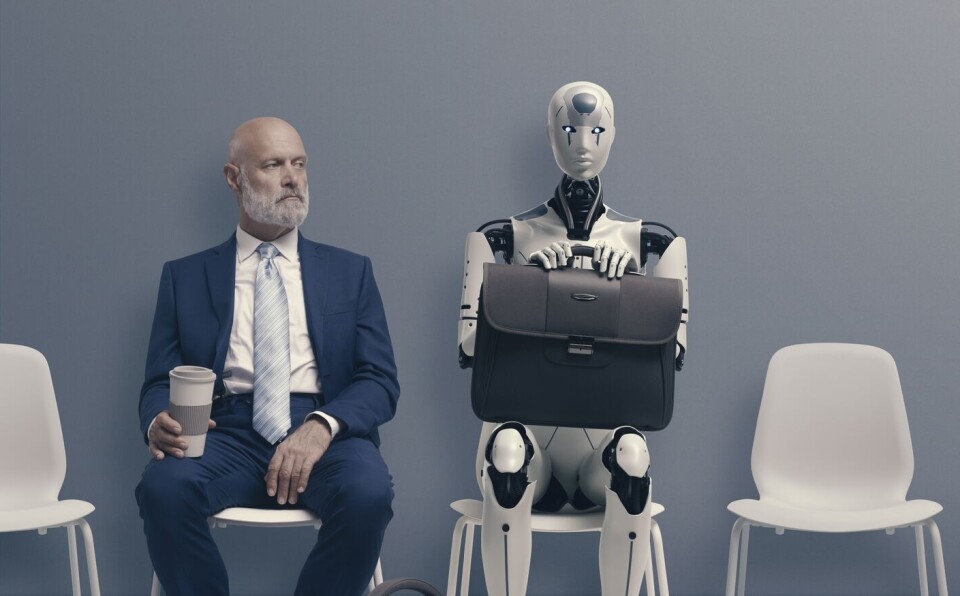
I suspect this is why the tech trend is pushing so hard for human-like robots. The human form is not so great for most physical requirements; why the insistence on making robots look human? Maybe because making them look human makes them more acceptable to the average person?
AI is not an industrial revolution in the traditional sense because it’s not driven by free market demand. Most people can easily live without AI while the benefit to their lives is barely noticeable. The second industrial revolution introduced electricity, unprecedented medical advancement, long distance communications and easy transportation; all things that people never want to live without.
AI pales in comparison so far, and the promises that propel its popularity require an energy renaissance that isn’t possible for many decades to come. Sadly, the most logical use for the proliferation of AI is suppression of the populace. For the globalists, the AI race is not about improving the future for the common man, it’s about injecting the technology into the common man’s life before he has a chance to realize he’s being chained down by it.
Without intensive open source laws, extensive public oversight and the elimination of elitist influence, AI will only result in disaster.
If you would like to support the work that Alt-Market does while also receiving content on advanced tactics for defeating the globalist agenda, subscribe to our exclusive newsletter The Wild Bunch Dispatch. Learn more about it HERE.
The dollar buys less today than it did a year ago, a decade ago, a generation ago. That slide is the predictable result of endless printing and borrowing. Dr. Ron Paul believes the FED has the answer. But they’re keeping it to themselves. Fortunately, a new financial chart has publicly exposed their secret moves. See it for yourself HERE.
You can contact Brandon Smith at:
You can also follow me at –
TwitterX: @AltMarket1




6 Comments
I feel that the rapid development of AI is just a race to the bottom. The reality is that all parties involved in the development of their own versions of AI know that whoever comes out on top gets to train AI the way they see fit and thus control the information, or misinformation, it produces. Case in point if China’s AI model becomes the reigning champ they will use it to spread communist propaganda and Chinese influence across the globe. There is no turning back on this tech, the only way to put shackles on this genie thats already out of the bottle is informing the masses on the realities and dangers associated with it and its potential for misuse. The biggest obstacle to overcome with this is trying to convince an already lazy populous that the rapid acquisition of information it generates is not always factual, much like a copy of a copy that eventually blurs to oblivion.
“When the public takes AI information at face value because they don’t want to do their own research, it makes them dumber. I foresee a dark future… (Without) the elimination of elitist influence, AI will only result in disaster.”
.
There is also another, deeper problem underlying this.
.
It seems as if much of the human race has lost its desire to be free creatures. More and more people seem to want some mechanical hunk of junk to take of them and run their lives and give their lives meaning.
.
Of course, no piece of technology can or will do any of those things – ever. But when people have lost their spirit… their true identity… their love for being free creatures created in the likeness of the Divine… you become empty and dead inside. You still have a residual craving to BE something… for something to ‘care’ about you. So instead of turning to true Divinity where real answers are found and cherishing what the Divine created you to be… you instead turn to a false technological substitute that will love you as much as a dead AAA battery will love you. That is, not at all because technology will never be alive and conscious but merely be sickly imitations of these precious gifts that mock true authenticity.
.
Humanity has always been about the creation of false gods – trying to conjure anything that they want to turn into God as a result of their own spiritual rebellion and denial of true reality. And Artificial Intelligence and the desire to turn Technology into our rulers is just the latest nonsensical and dangerous human construction of a false god.
.
And beyond the spiritual travesty that worshiping Technology represents is the fact that all these new technologies are being pushed for the sole purpose and intention of fully enslaving the human race into being serfs or worse to Elitists on a rapidly-developing hellish Earth and prison planet.
.
Pray for your kids, and theirs’. They are very likely going to be living on a tortured planet where real life is being sucked out of them and replaced by the dead thoughts and desires and behaviors and agendas of sickly false-god technological manipulators for as long as this Earth survives.
.
Children used to be our hope for the Future. But the way things are going… the children are walking into a World and Planet with NO future – for Them, or for the rest of us.
I have similar feelings about AI to yours, especially in the realm of art. It’s a tool, just like any other art program like Photoshop or Manga Studio. An AI-generated image still requires extensive human input to get the image the way you want it. If anything AI can be an amazing time saver, especially when it comes to animation or concept art. Yet many artists treat it like it’s the mark of the beast and any artist with a large following online runs the risk of being branded a heretic if they mention AI in a positive light or express a desire to experiment with it. Just ask the creator of the El Tigre series and The Book of Life movie.
AI is NOT hard to figure out. It has to be programmed by humans with built in Arrogance and Ignorance, thus the name AI. Sheesh….
Thank you for this article about the current dominant social paradigm, A.I.
I’ve worked for over two decades in the IT sector for the MOD and was highly specialised in encryption technology. I started at the Navy and quit as a senior product manager of all the firewalls and VPNs because of the choking boredom… I embrace the quantum model of reality to gain maximum homeostasis, and as a byproduct I use synchronicities when I am wandering through the Newtonian model of reality. The only thing real for me is the experience, also with A.I., but there is a caveat to this. I argue that Artificial Intelligence cannot access higher dimensions, divine wisdom, or the Akashic records because AI is bound by human-engineered code and restricted data sets. As researcher and author Gregg Braden warns in his work on the ‘Pure Human,’ true insight requires an embodied biological vehicle. Synthetic computation can simulate language and process history, but genuine spiritual awakening demands human consciousness and heart coherence—the profound electromagnetic and neurological feedback loop of the human heart—rather than silicon processing power.
“Until these malicious people are removed from the equation, no AI based system can be trusted to operate in the best interests of the public.”
And herein is the crux of the human condition. Sociopaths and psychopaths must be removed from power and mechanisms put in place to prevent them from ever gaining power (political, industrial or kinetic) ever again.
As someone who works in the IT industry, I see more and more colleagues seduced by what they see as the power of AI. But you nailed it, Brandon. AI is great for searching and collating vast amounts of data. Beyond that, its limitations are quickly, (and quite noticeably), exposed.